
Real Fight Skills. Real Coaching. Real Training for Ages 12-17.
Boxing, Kickboxing, Muay Thai, and MMA — taught the way real coaches teach. No babysitting. No kid stuff. Just real skill, real respect, and a class built to push you to become someone different. From a Marine Corps veteran with 35+ years on the mats and over 5,000 students through the program.
Marine Corps Veteran
35+ Yrs Coaching
5,000+ Students Trained
West Jordan UT
Start With a Free 7-Day Trial
You don't have to decide anything yet. Come train for a week and find out for yourself.
A full week inside the program — real coaching, real classes, real training. Not a watered-down sample. The actual thing, free, for seven days. Show up, put in the work, and see what it feels like to train somewhere that treats you like you can handle real things.
Pick a start time below and book your first class.
Free · No commitment · Book your first class in under a minute
Questions? Call us at 801-842-5393.
This page was probably built for someone like you.
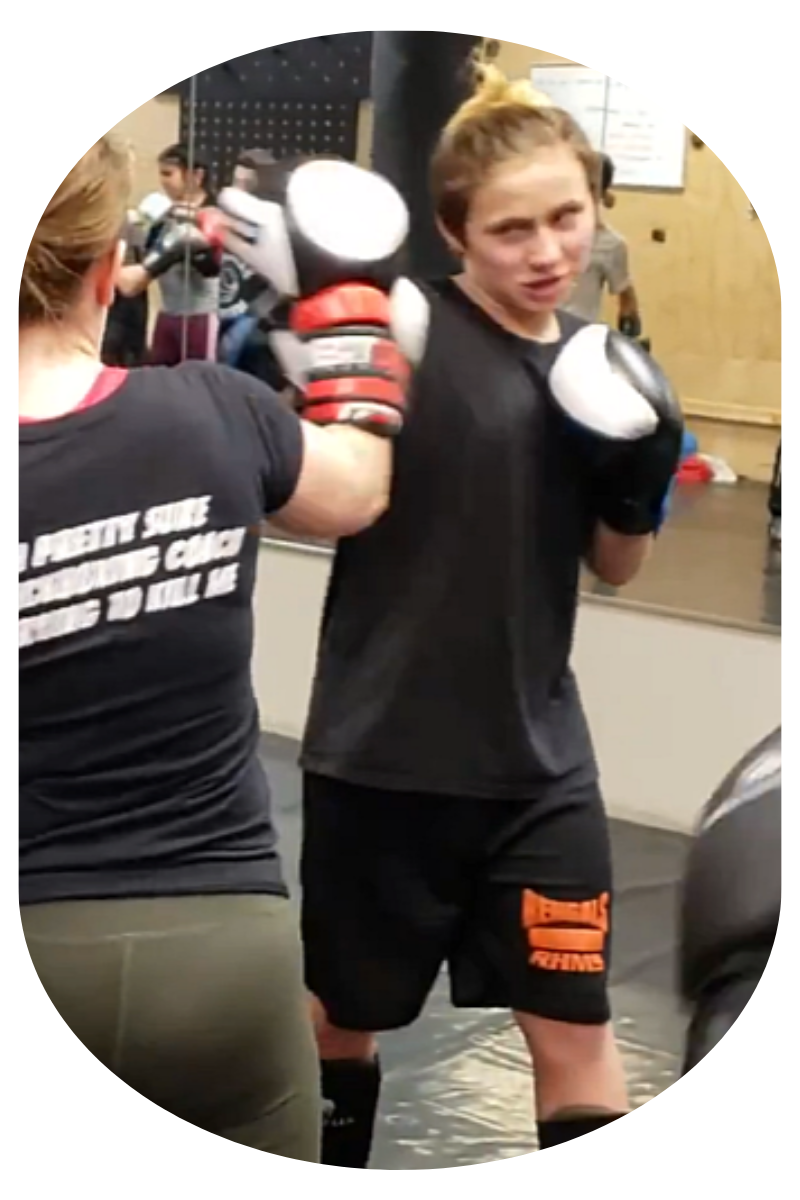
Most of the teens who walk through our door are dealing with one or more of these. If any of it sounds familiar, keep reading.
You know you can do more — you just can't get yourself to do it. Other people see your potential. Your parents see it. Your teachers see it. You see it sometimes. But something keeps you stuck. You hesitate before trying. You back down before you try. You hate that about yourself, and you don't know how to change it.
You shut down when things get hard. Not because you're weak. Because nobody's actually taught you how to push through a hard moment — they've only told you that you should. There's a difference.
You let people walk over you and hate yourself for it. Maybe it's a friend who always gets their way. A classmate who pushes too far. A situation you backed down from and replayed in your head for a week. You don't necessarily want to fight. You just want to stop being the person who shrinks.
You're tired of being treated like a little kid. You're between 12 and 17. Adults talk down to you. Coaches talk down to you. The world treats you like you can't handle real things. You can. Nobody's giving you the chance to prove it.
You're not broken. None of these are personality flaws. They're missing skills. And every one of them is trainable — the same way you'd train a sport, an instrument, or anything else that takes real practice.
That's what we do here.
This is what four weeks did for Charliee.
Charliee is athletic. She wrestles. From the outside, she had it together.
But she'd tell you something different. Quiet voice. Timid in new situations. Confidence that flickered the moment things got hard. Her family agreed. So did the people who watched her wrestle.
Four weeks ago, she walked into Level 8.
Today she's tackling drills she would have backed away from a month ago. Her voice carries across the gym. And here's the part she didn't expect: her wrestling has gotten visibly better. Sharper. More aggressive. More committed to her position when it counts.
Charliee didn't become a different person. She stopped hiding parts of the person she already was.
That's what training real skill does. The skill is the vehicle. The confidence is what shows up on the way.
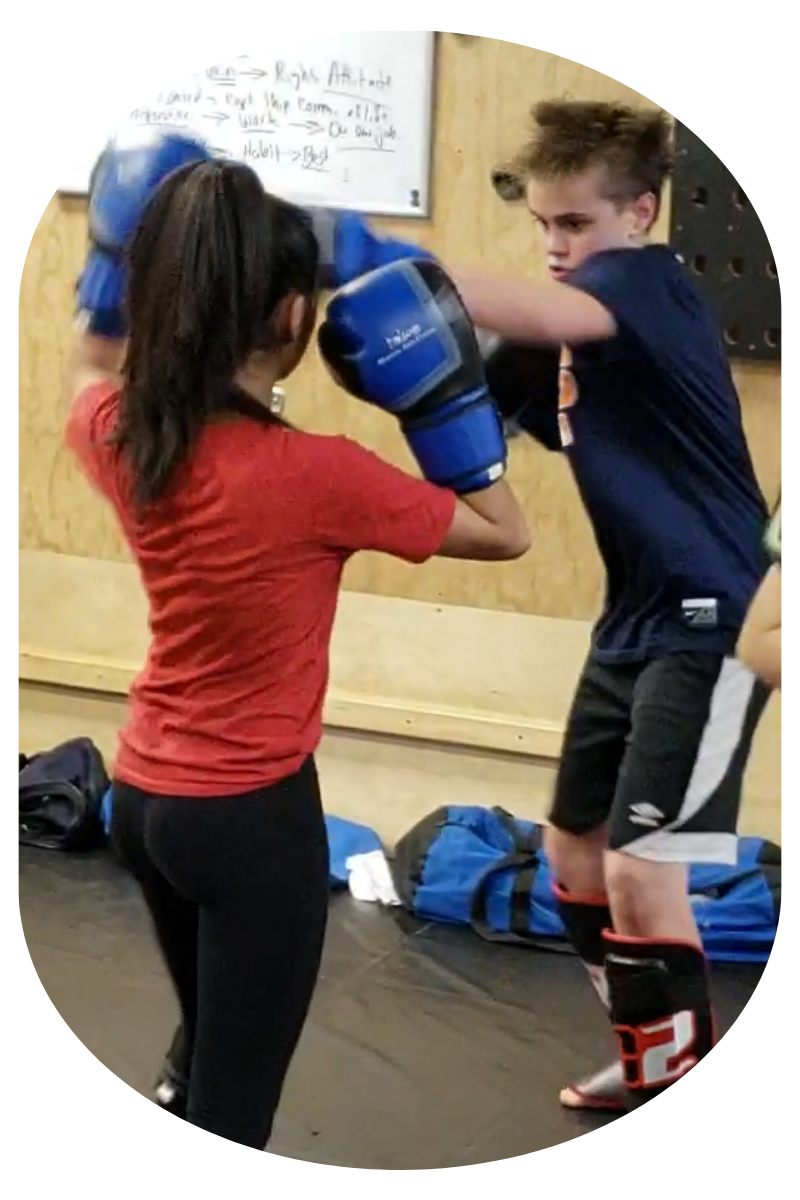
Most schools teach choreography. We teach what actually works.
Most teen martial arts classes are built around patterns to memorize, belts to earn, and demos to put on at the end of the season. That's fine for some people. It's not what we do.
We teach four real disciplines: Boxing, Kickboxing, Muay Thai, and Pankration (MMA). The same skills serious adults train. Scaled to teen bodies, taught with the safety controls that make sense — no full-contact sparring, no slamming on mats, no tough-guy culture — but the skills themselves are the real thing.
Real footwork. Real defense. Real power. Real awareness.
That matters for two reasons. One — you'll know how to handle yourself if you ever need to. Most teens who train here never have to, because the way they carry themselves changes, and most situations end before they start. Two — the kind of training that builds real skill happens to build everything else along with it. Confidence. Focus. Discipline. They come along for the ride.
Patterns can't do that. Choreography can't do that. Real coaching can.
Four things every class is built around.
Real self-defense.
This isn't theater. This isn't kicking pads to a music track. We teach what actually works when something real happens — at a party, walking to your car, on the way home from a friend's house. Most students who train here never have to use these skills. But if it ever comes to it, you'll know.
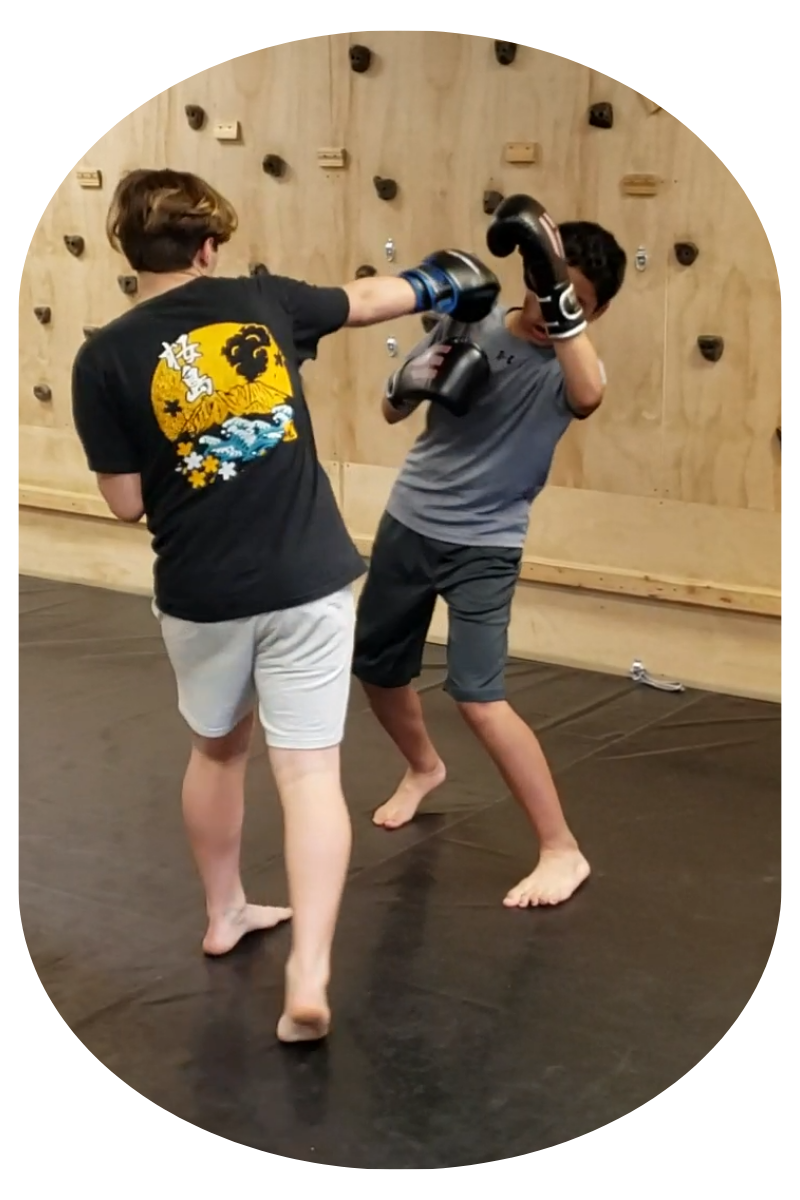
Confidence.
Not the kind you're handed. The kind you earn. A combination you finally land clean. A drill you push through. A coach who looks at you and says "yeah — that one was real." Confidence at Level 8 isn't a lecture or a slogan. It's what shows up after you've done something hard.
Focus.
You can't fake focus for 75 minutes of real training. You either lock in or you fall behind. The good news: focus is a skill, not a personality trait. We coach it the way we coach a jab. Eyes forward. Listen the first time. One thing at a time. Once your brain is trained to do this on the mat, it transfers everywhere — school, sports, real life.
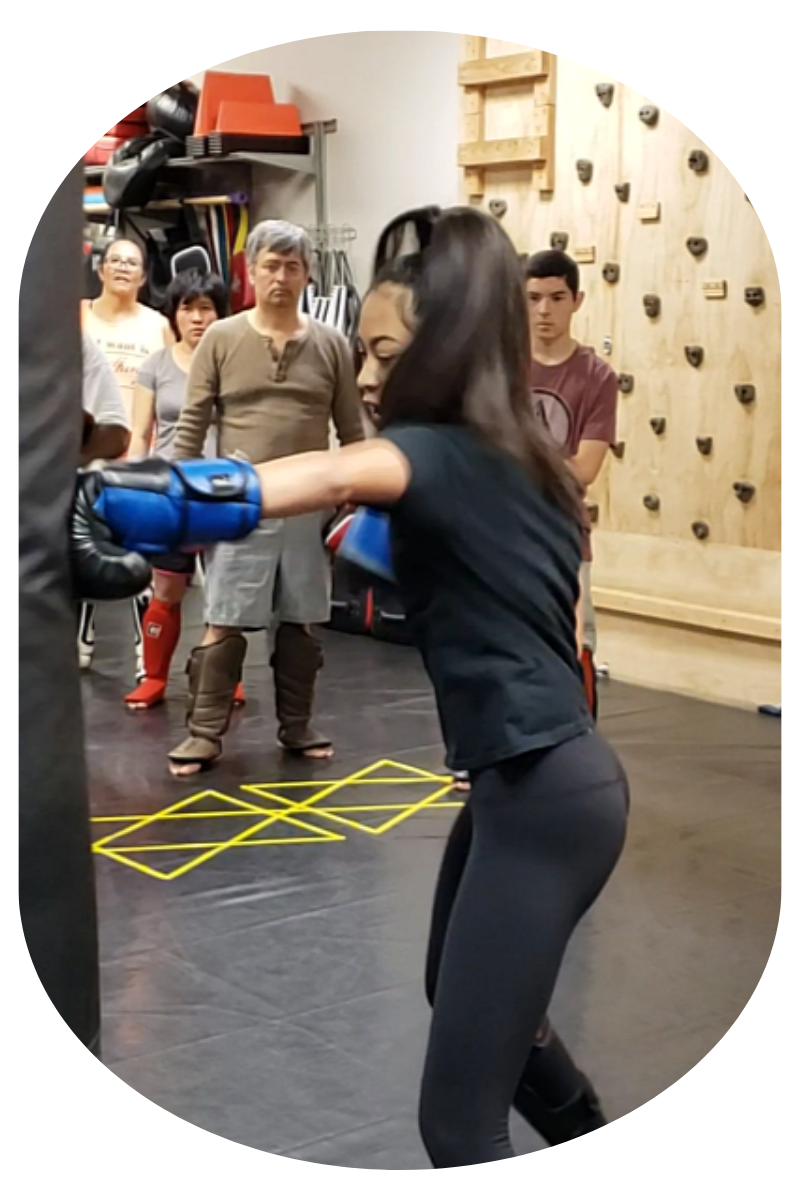
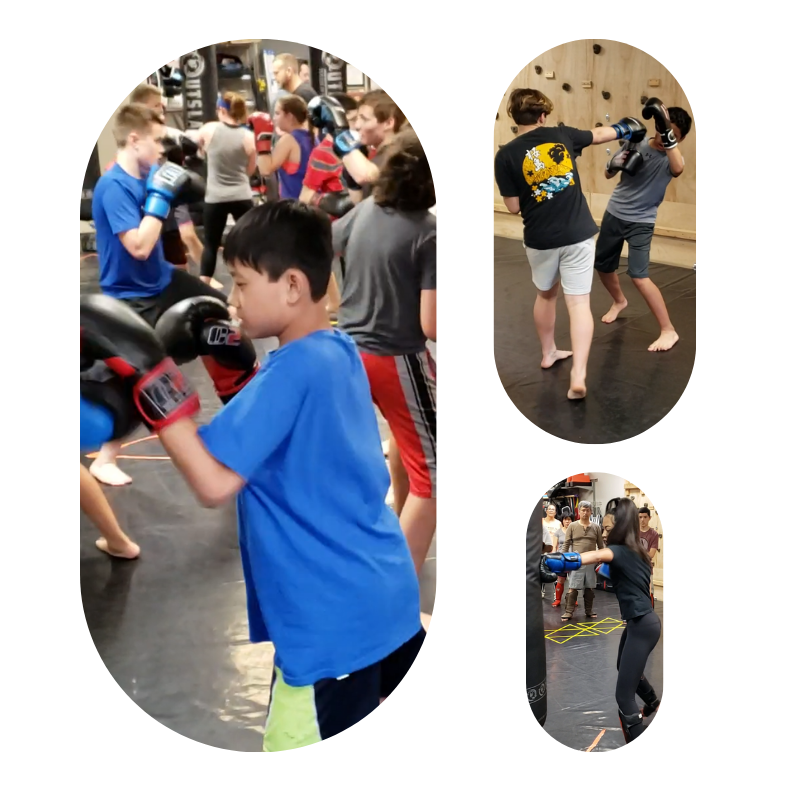
Discipline
The willingness to do what needs to be done, even when you don't feel like it. That's it. That's all discipline is. We don't teach it with lectures. We teach it the only way it actually gets built — by giving you something hard and letting you decide to push through it. Every class is a rep.
If you already play a sport, this makes you better at it.
This isn't a guess. It's what we watch happen every week.
Charliee's wrestling sharpened in four weeks. We have students whose baseball coaches notice their hand speed and quick reactions and ask where it came from. Basketball players whose footwork changes. Football players who start moving like a different kid. More assertive soccer players.
The reason is simple. Martial arts trains the things every athletic sport is built on, but rarely coaches directly — balance, reaction time, hand-eye coordination, situational awareness, and the ability to stay calm when a body is moving fast at you. You get those in every class, layered into every drill, automatically.
If you already play a sport, the time you spend at Level 8 doesn't take away from it. It compounds it. Two to four hours a week of real martial arts training is one of the highest-leverage things any teen athlete can do for the rest of their season.
Boxing. Kickboxing. Muay Thai. MMA. The full curriculum.
Boxing
The foundation of every striking art. Footwork, defense, and the cleanest hand skills you'll ever learn. Most real-world conflicts start standing up — boxing teaches you how to stay there and how to respond.
Kickboxing
Power and precision with the legs. Speed, power, and movement combined into one system. Almost no other martial art delivers all three to a teen this efficiently.
Muay Thai
The Art of Eight Limbs. Hands, knees, elbows, kicks, and the clinch — all integrated into one system. Power with grace. Taught with safety controls that let you learn the technique without the risk.
Pankration (MMA)
The ancient art of every range — standing, on the ground, and back to standing. Takedown defense. Get-up skills. Real positional awareness. The complete picture of what self-defense actually requires.
Four disciplines. One curriculum. Real coaching at every step.
From the Mat
Parent stories—how training turned effort into real-world results.
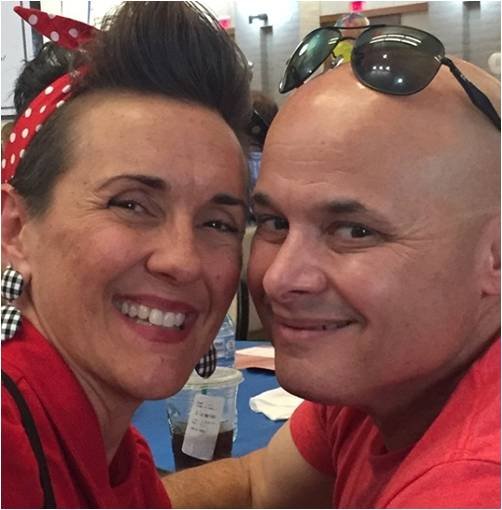
Maurice & Kiersten B.
Parent Story
"We like the confidence it has instilled in Liam in every aspect of his life. We also liked the fostering of discipline and how it translates to sports, academics, and making responsible choices. The impact on performance in other sports is very noticeable. Liam plays baseball and basketball. His baseball coaches always mention his hand speed and quick reactions, both of which can be attributed to his work with Master Jason."

Marie W.
Parent Story
"When I first met Master Jason I was so impressed with him. Not just his background in martial arts and the Marine Corps, but his philosophy in life. He teaches you to believe in yourself, so that whatever you set your mind to, you can achieve. He teaches respect and self-confidence. Both my teens always come home talking about how much they like class, and it shows with the effort they put into their training."
Sam M.
Parent Story
"I have both my teenage daughter & son in Master Jason’s program. We were looking for something that would be both physical and mental. I wanted them to work on individual growth. One thing I have definitely noticed in my kids is that they are more focused on school and more disciplined. I have seen a great improvement in their school grades. I feel their focus and confidence have improved."
The coach you're trusting with this.
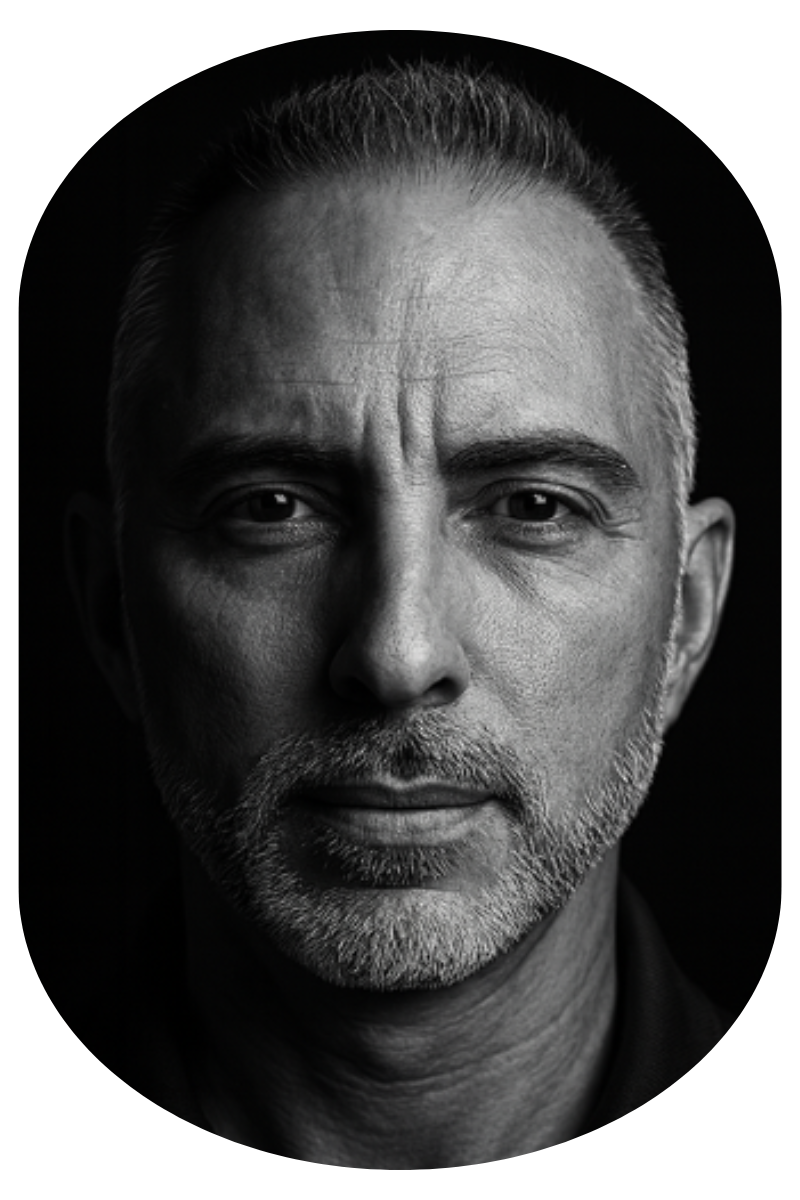
Master Jason Froehlich has spent 35+ years on the mats, including service in the United States Marine Corps and a spot on the All Marine Corps Fight Team — one of fifteen selected from a tryout pool of seventy.
He's coached more than 5,000 students through the program he built.
He's not a sport coach. He's not a franchise. He's a Marine veteran and martial arts master who has spent his entire adult life figuring out what actually changes people — and then teaching it, one student at a time.
He's also the one who'll sit down with you (and your parents, if they want) at the end of the two-week trial to talk honestly about whether this is the right next step. He won't sell you. He'll just tell you what he sees.
For the parents reading this.
Is it safe? Yes. No full-contact sparring. No slamming on mats. No tough-guy attitudes. Every drill is supervised, every partnership is coached, and every session is built on safety first. We've been doing this for 35 years.
Will this make my teen more aggressive at school? No — the opposite. We teach self-control as part of the curriculum, specifically because we teach real skills. The teens who walk in already wanting to fight are the ones who learn the fastest that they don't need to.
Will my teen quit? Some teens do. Most don't. The two-week trial is designed to answer that question with no risk — if it's clearly not working by the end, you walk away with the gloves and the t-shirt and no commitment to anything more.
Is it good for girls? Yes. Charliee is one of our strongest students. Many of our teens are girls — and every girl walks in feeling she belongs from day one. Same training, same standards, same warm welcome.
What if my teen has never done this before? That's most of them. The class is built for the teen who's never thrown a real punch, and built to push the teen who already trains. Both happen in the same room, at the same time.
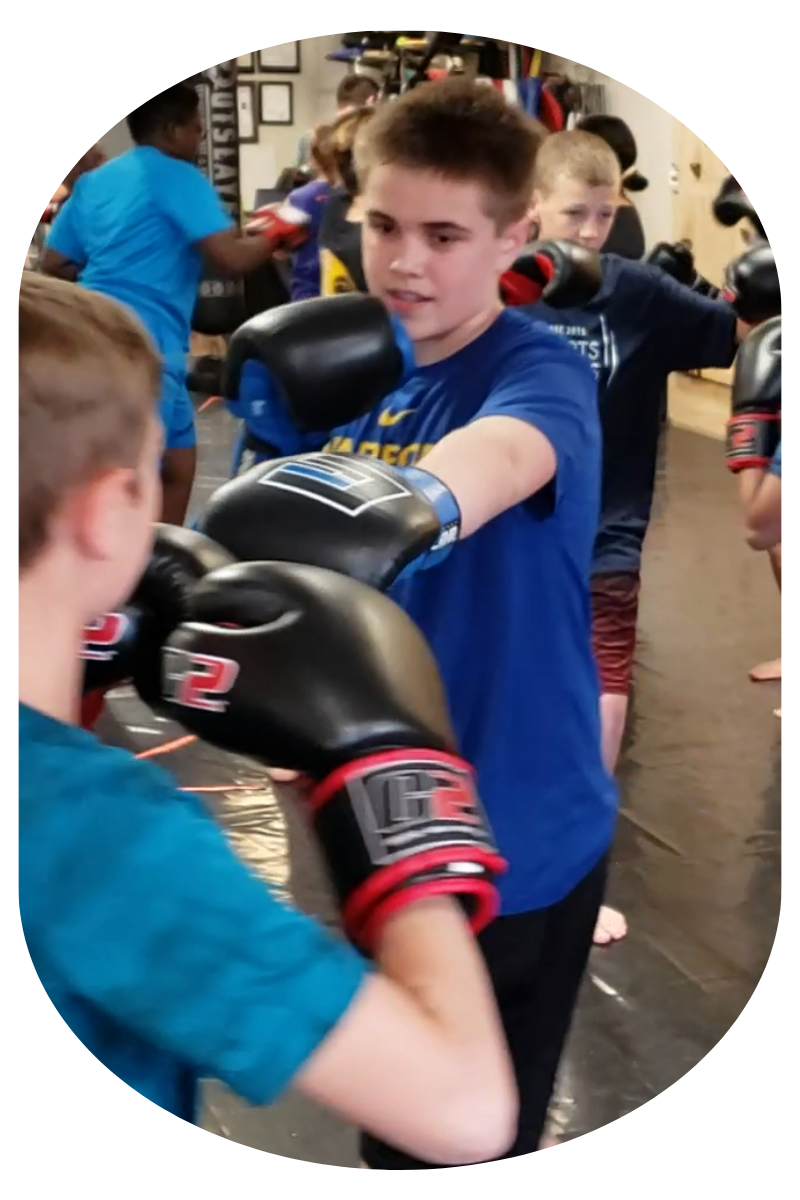
A real training schedule. Built for teens with real lives.
Most teen martial arts programs run twice a week. Ours runs five.
Class times:
Monday, Tuesday, Wednesday, Thursday: 7:00pm - 8:15pm
Friday: 6:00pm - 7:15pm
That's 75-minute sessions, five days a week. You don't have to train every day — most teens come 3 days a week and that's the right rhythm to start. But if you want to push, the door is open. We're not running a once-a-week kiddie class. This is real training for teens who want it.
7-Days. Free. Real training. See what happens.
The 7-day trial is the simplest way to find out if this is the right fit.
Get a 1-on-1 with Master Jason at the end to talk honestly about what's next. No long-term commitment.
If you're the teen we've been describing on this page, you'll know within the seven days. So will we.
Free · No commitment · Book your first class in under a minute
Want to talk first? Call us at 801-842-5393.
Where to find us:
1801 W 7000 S West Jordan, UT 84084
FAQs
If there are other questions that aren't answered, please contact us.
Do students wear uniforms?
For our youth classes (6-11) they wear a simple Level 8 uniform of shorts and a t-shirt with a belt ranking. Our teen and adult classes are NOT required to wear uniforms - appropriate athletic gear.
Do students earn belts or rank?
Yes, all our classes have a ranking system to them which each student earns a level. To earn a "black belt" level, each student will have to meet the testing requirements.
Are sessions female-friendly?
Yes, all our programs are gender friendly. Every student is treated fairly and respected. Each student is given the opportunity to learn at their own level and move at their own pace. And every student gets to learn how to be a warrior.
How safe is it to train?
We make safety a priority here at Level 8. We want students to learn and feel comfortable training in martial arts. We understand how intimidating it is to do this activity, so we take everyone through a process to develop their skills while remaining safe. There is no tough-guy attitudes allowed in the training zone. No one is the king of the gym, and no one is allowed full-contact sparring. If students want to fight, that is left for the ring.
How long does it take to get a black belt?
It all depends on the student and their dedication. However, it generally takes 3-4 years to get to this level.
If I enroll, do I have to sign up for a long-term contract?
No. We do not require you to sign up for a long-term contract.
What ages do you teach?
We have age-appropriate classes that are separate for 6-8 years old, 9-11 years old, 12-17 years old (teens), and then 18+ (adult classes).
Area Serviced
West Jordan
South Jordan
Taylorsville
Midvale
© Copyright 2026-Present Level 8 Martial Arts & Fitness LLC. All Rights Reserved